AI Job Anxiety Splits Korea and the U.S. as Koreans Hold On and Americans Move
AI is raising job anxiety, but Korea and the U.S. are reacting differently. U.S. employees are moving through job changes, retraining and relocation, while Korean employees prefer stable employment and internal transfers. Writing, customer support and junior coding are highly exposed to automation. AI wage premiums, converted into won, deepen the pressure.
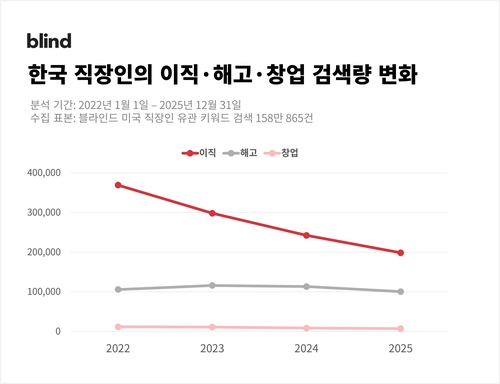
AI-driven job anxiety is no longer a distant risk. The main issue is the speed of transition, not instant job disappearance. Korean employees are more likely to stay inside their organizations and adapt their tasks, while U.S. employees are already reacting through job changes, retraining, relocation and side work. The same AI shock is producing different behavior because labor rules, layoff practices, pay systems and switching costs differ.
Same Anxiety, Different Moves
Generative AI is automating writing, translation, research, customer support, junior coding, marketing copy and accounting input. Exposure estimates place about 60% of jobs in advanced economies and about 40% of jobs worldwide within AI's reach. In the U.S., role-based pay and faster hiring adjustments push workers to add AI skills to resumes, learn data analysis and automation tools, and consider higher-paying industries or cities. In Korea, regular jobs at large companies, finance firms and the public sector still carry a strong stability premium, so internal transfer and reskilling come first.
Wages and Korea's Next Test
The compensation gap also shapes behavior. U.S. AI engineers, data scientists and automation designers commonly fall in the $100,000-$200,000 range, roughly 140 million-280 million won at KRW 1,400 per dollar. That gap raises pressure on routine office and entry-level knowledge jobs. Korean banks, insurers, brokerages, platforms and manufacturers are expanding AI for call summaries, report drafts, coding support and risk review. Under Korea's AI governance and privacy-labor debates, companies must clarify responsibility, data use and evaluation rules. In 2026 hiring and promotion, the decisive skill is not AI use alone but output verification, data interpretation and work redesign.
Key points
- AI is raising job anxiety, but Korea and the U.S. are reacting differently. U.S. employees are moving through job changes, retraining and relocation, while Korean employees prefer stable employment and internal transfers. Writing, customer support and junior coding are highly exposed to automation. AI wage premiums, converted into won, deepen the pressure.
- Use the body and FAQ context before acting on this update.
- Compare with related issues inside the category hub.
FAQ
Why is AI job anxiety different in Korea and the U.S.?
U.S. labor markets adjust faster through layoffs, hiring shifts and role-based pay. Korea's regular employment protections, seniority pay and switching costs make internal transfers and staying put more common.
What should Korean workers prepare for?
They need to automate repetitive tasks, verify AI outputs, interpret data and understand security rules. The key is proving judgment, not just using AI tools.
Will AI immediately replace jobs?
AI is more likely to reshape routine knowledge work first, including writing, support, junior coding and accounting input. The impact depends on job redesign and retraining speed.
Latest stories

Alan Greenspan Dies at 100: 19-Year Fed Chair Who Shaped Global Markets
Alan Greenspan, former chair of the Federal Reserve, died on June 22 local time at 100. He led the Fed from 1987 to 2006 and became a defining central banker of the long U.S. expansion. His Greenspan put helped stabilize market psychology, while low-rate policies left a lasting debate over bubbles and leverage. For Korea, his era made Fed signals central to

Warsh Signals End of Fed Forward Guidance, Jolting U.S. Treasuries and Korean Markets
Kevin Warsh’s Fed is moving toward a less prescriptive communication regime. The 2% inflation target remains in place, but guidance on the future rate path is likely to weaken. U.S. Treasury volatility is rising, and Korea faces spillovers through exchange rates, foreign flows and corporate funding costs.

Warsh’s Fed Guidance Pullback Raises U.S. Borrowing-Cost Risk and Korea Market Watch
Warsh’s proposal would scale back the Fed’s habit of steering markets through detailed rate-path signals. Less guidance can increase uncertainty premiums in U.S. Treasuries and private credit. Korea faces spillovers through the won, dollar funding costs and bond-market flows.

Altcoins Stay Weak as Rate Pressure Overrides Ceasefire Hopes
Altcoins have not produced a broad rebound even as geopolitical risk eases. Total crypto market value stands near $2.26 trillion, or about 3,452 trillion won, while Bitcoin dominance remains high at 56.6%. U.S. rates at 3.50%-3.75% and Korea’s 2.50% base rate are limiting rotation into smaller tokens.
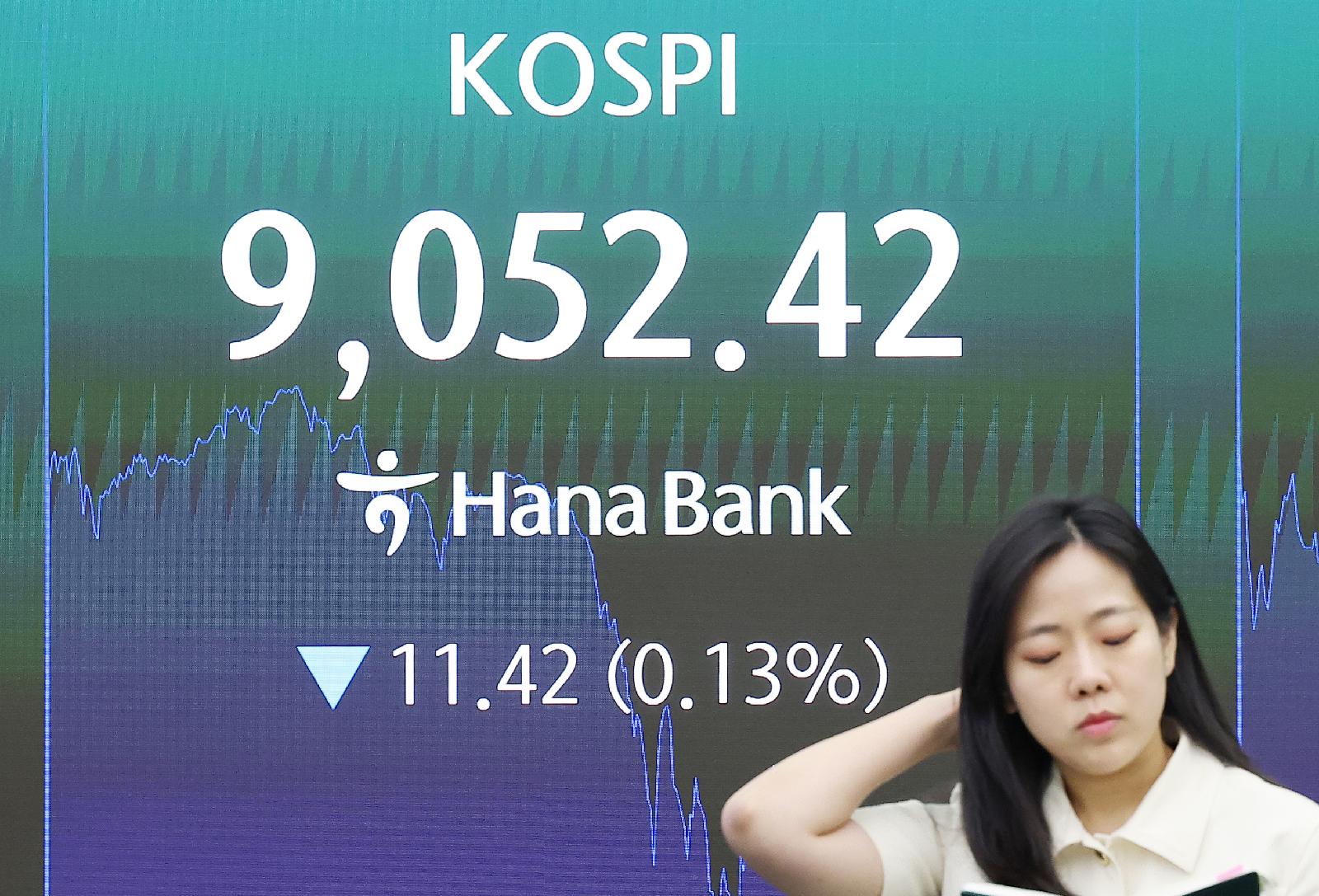
KOSPI Breaks 9,000 for the First Time as Micron Earnings and U.S. PCE Set the Next Test
The KOSPI has entered a new range after touching 9,000 for the first time. This week’s key catalysts are Micron’s earnings and the U.S. May PCE price index. Strong memory-chip signals could support further gains, while sticky inflation would pressure rates, the dollar and Korean growth stocks.
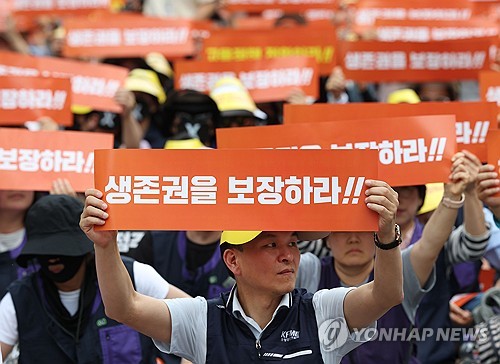
Small Business Minimum Wage Burden Deepens as 38% Cut Hiring
Most small business owners view the current 10,320 won minimum wage as a major cost burden. More than eight in ten feel pressure, and 38% have reduced employment. Labor costs are shaping hiring, pricing, hours, and automation decisions.

Eggs at 5,200 Won for 10 Signal Mounting Pressure on Korean Grocery Prices
The price of 10 eggs has risen to around 5,200 won, intensifying pressure on household food budgets. Eggs are a basic ingredient used in homes, school meals, restaurants, bakeries, and quick meals. The increase is not just about one item; it raises the visible cost of everyday eating. Consumers are expected to seek discounts and substitutes more actively.
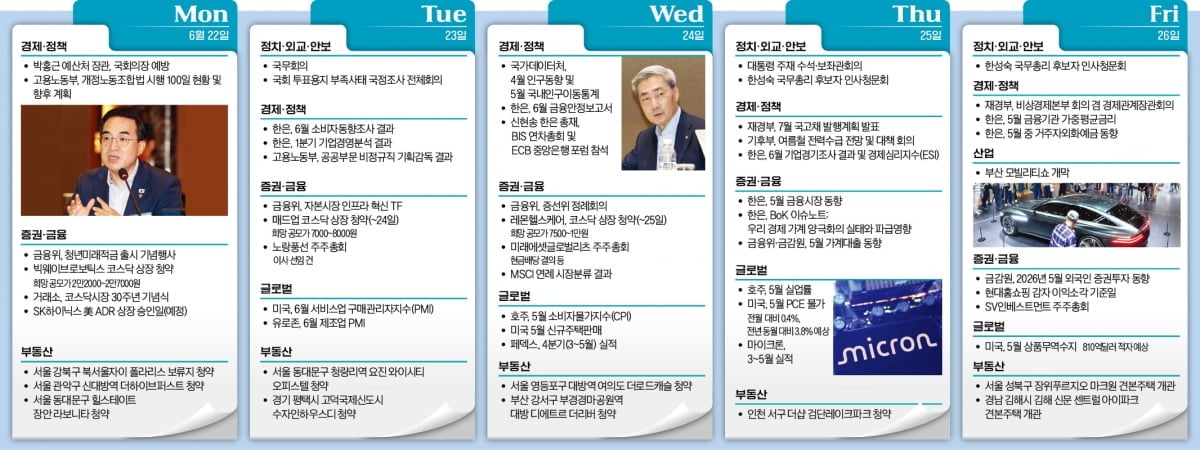
Semiconductor Tailwind Reaches Business Sentiment Before Household Prices
The semiconductor upturn improves manufacturing sentiment, export profitability and capex before it directly lowers consumer prices. Felt inflation is more sensitive to groceries, dining, housing and exchange rates. If expectations move above the BSI baseline of 100, jobs, wages and supplier orders can transmit the recovery to households. The speed depends o