Korea’s second-half growth strategy targets three highs and youth employment
The second-half strategy puts the three highs at the center of economic management. The goal is to ease household costs, reduce financing pressure and limit exchange-rate volatility. Youth employment is treated as a growth issue, not only a labor-market issue.

The government is making the three highs, high inflation, high interest rates and a high exchange rate, the central challenge of its second-half growth strategy. The policy focus is shifting from broad stimulus to lowering household pressure and widening entry routes into employment for younger workers.
Three highs define the agenda
High prices reduce real household income, high borrowing costs weaken consumption and investment, and a weak won raises import costs for companies and consumers. The strategy therefore treats inflation, market rates and the won-dollar exchange rate as linked risks rather than separate problems.
Key indicators include consumer prices, market interest rates, the exchange rate, youth job data and corporate hiring plans. For people in their 20s and 30s, a delayed first job can affect income, housing plans and consumption. That makes youth employment a front-line growth issue.
Jobs and domestic demand
The youth jobs package is expected to combine hiring support, job training and closer links with industry demand. When uncertainty rises, companies often delay new recruitment and favor experienced workers. That lengthens the waiting time for first-time job seekers and weakens domestic demand.
Korean small businesses, self-employed borrowers, manufacturers dependent on imported materials, and exchange-rate-sensitive sectors such as retail, aviation and energy will feel the policy mix most directly. The outcome will depend on whether prices, rates and jobs stabilize together in the second half.
Key points
- The second-half strategy puts the three highs at the center of economic management. The goal is to ease household costs, reduce financing pressure and limit exchange-rate volatility. Youth employment is treated as a growth issue, not only a labor-market issue.
- Use the body and FAQ context before acting on this update.
- Compare with related issues inside the category hub.
FAQ
What is the core of the second-half strategy?
It focuses on easing the three highs and expanding job opportunities for young people.
Why does the exchange rate matter?
A weaker won raises import costs, which can feed into business costs and consumer prices.
Why is youth employment central?
Delayed entry into work reduces income and consumption, weakening the broader growth cycle.
Latest stories

Alan Greenspan Dies at 100: 19-Year Fed Chair Who Shaped Global Markets
Alan Greenspan, former chair of the Federal Reserve, died on June 22 local time at 100. He led the Fed from 1987 to 2006 and became a defining central banker of the long U.S. expansion. His Greenspan put helped stabilize market psychology, while low-rate policies left a lasting debate over bubbles and leverage. For Korea, his era made Fed signals central to

Warsh Signals End of Fed Forward Guidance, Jolting U.S. Treasuries and Korean Markets
Kevin Warsh’s Fed is moving toward a less prescriptive communication regime. The 2% inflation target remains in place, but guidance on the future rate path is likely to weaken. U.S. Treasury volatility is rising, and Korea faces spillovers through exchange rates, foreign flows and corporate funding costs.

Warsh’s Fed Guidance Pullback Raises U.S. Borrowing-Cost Risk and Korea Market Watch
Warsh’s proposal would scale back the Fed’s habit of steering markets through detailed rate-path signals. Less guidance can increase uncertainty premiums in U.S. Treasuries and private credit. Korea faces spillovers through the won, dollar funding costs and bond-market flows.

Altcoins Stay Weak as Rate Pressure Overrides Ceasefire Hopes
Altcoins have not produced a broad rebound even as geopolitical risk eases. Total crypto market value stands near $2.26 trillion, or about 3,452 trillion won, while Bitcoin dominance remains high at 56.6%. U.S. rates at 3.50%-3.75% and Korea’s 2.50% base rate are limiting rotation into smaller tokens.
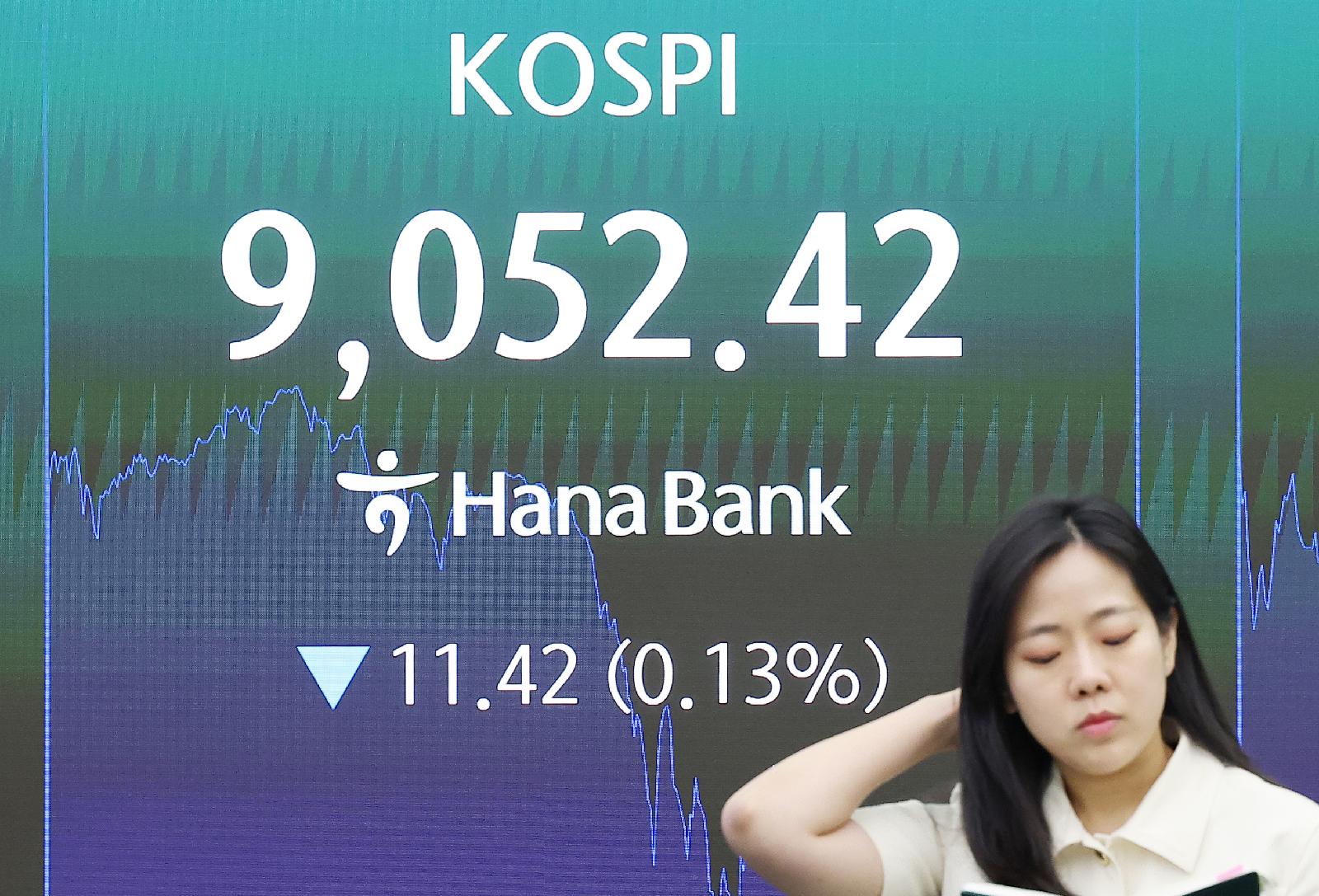
KOSPI Breaks 9,000 for the First Time as Micron Earnings and U.S. PCE Set the Next Test
The KOSPI has entered a new range after touching 9,000 for the first time. This week’s key catalysts are Micron’s earnings and the U.S. May PCE price index. Strong memory-chip signals could support further gains, while sticky inflation would pressure rates, the dollar and Korean growth stocks.
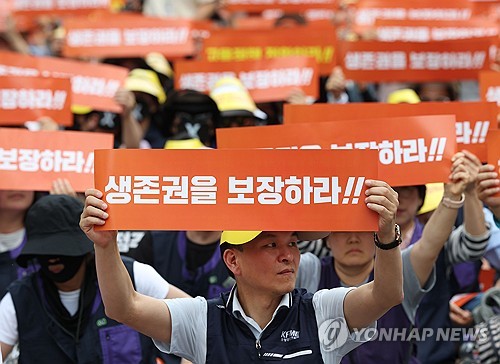
Small Business Minimum Wage Burden Deepens as 38% Cut Hiring
Most small business owners view the current 10,320 won minimum wage as a major cost burden. More than eight in ten feel pressure, and 38% have reduced employment. Labor costs are shaping hiring, pricing, hours, and automation decisions.

Eggs at 5,200 Won for 10 Signal Mounting Pressure on Korean Grocery Prices
The price of 10 eggs has risen to around 5,200 won, intensifying pressure on household food budgets. Eggs are a basic ingredient used in homes, school meals, restaurants, bakeries, and quick meals. The increase is not just about one item; it raises the visible cost of everyday eating. Consumers are expected to seek discounts and substitutes more actively.
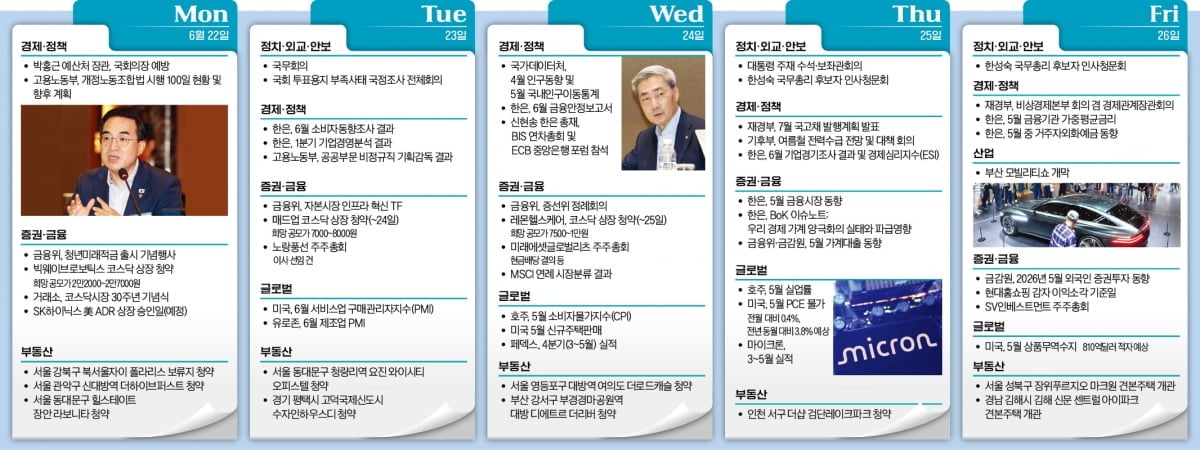
Semiconductor Tailwind Reaches Business Sentiment Before Household Prices
The semiconductor upturn improves manufacturing sentiment, export profitability and capex before it directly lowers consumer prices. Felt inflation is more sensitive to groceries, dining, housing and exchange rates. If expectations move above the BSI baseline of 100, jobs, wages and supplier orders can transmit the recovery to households. The speed depends o